Study strategies
Build a study week you can stick to
Plan short sessions around your schedule, your mistakes, and the time you actually have.
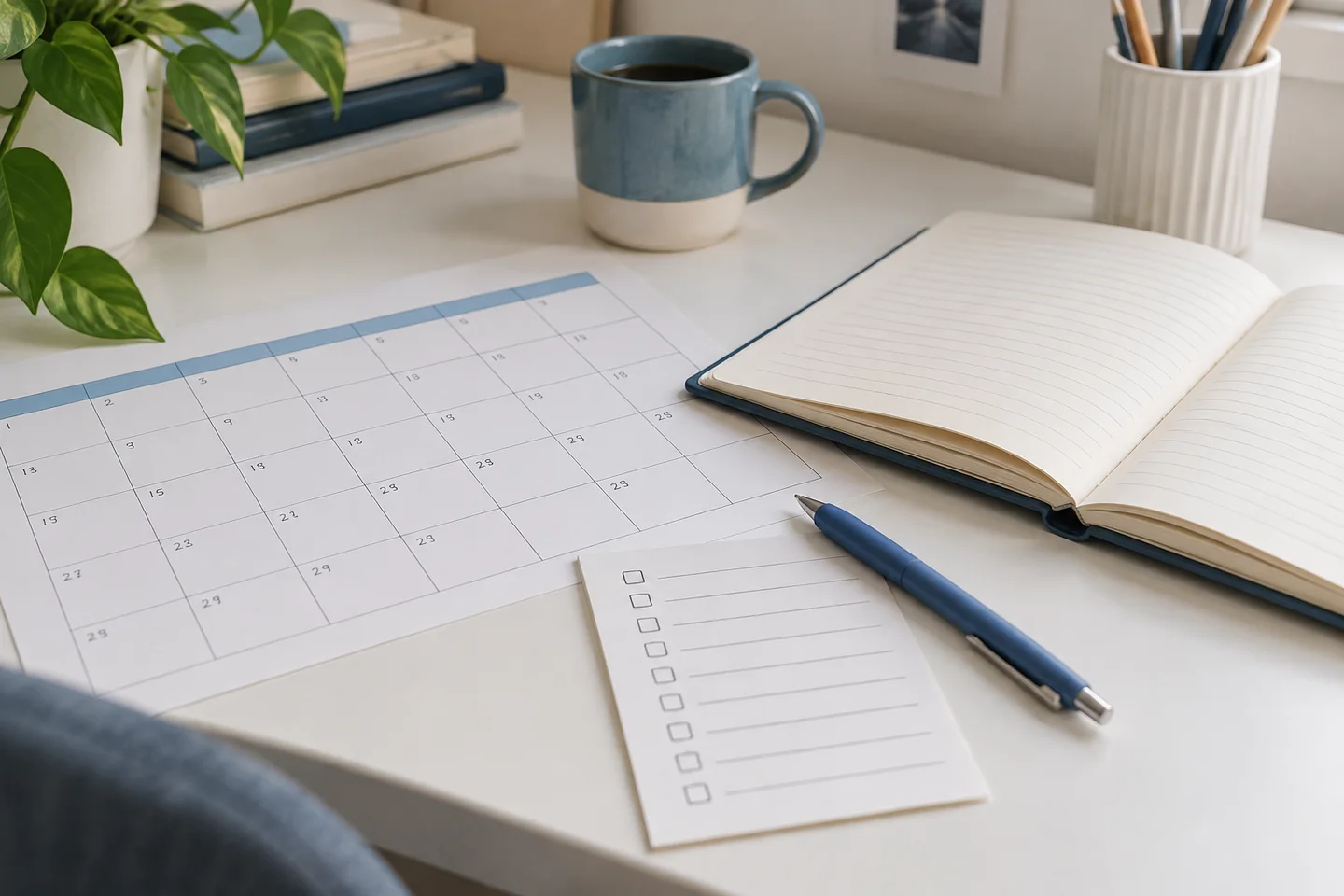
Begin with your real schedule
Look at the next seven days and mark work, school, travel, and other commitments. Choose available blocks you can usually protect. Three shorter sessions are a useful place to start if a long session is hard to fit in.
Give each session one job
A useful session has a specific purpose. For example: review five missed questions, practice linear equations, or read two short passages and explain the evidence for each answer. “Study math” is harder to start because it does not say what to do.
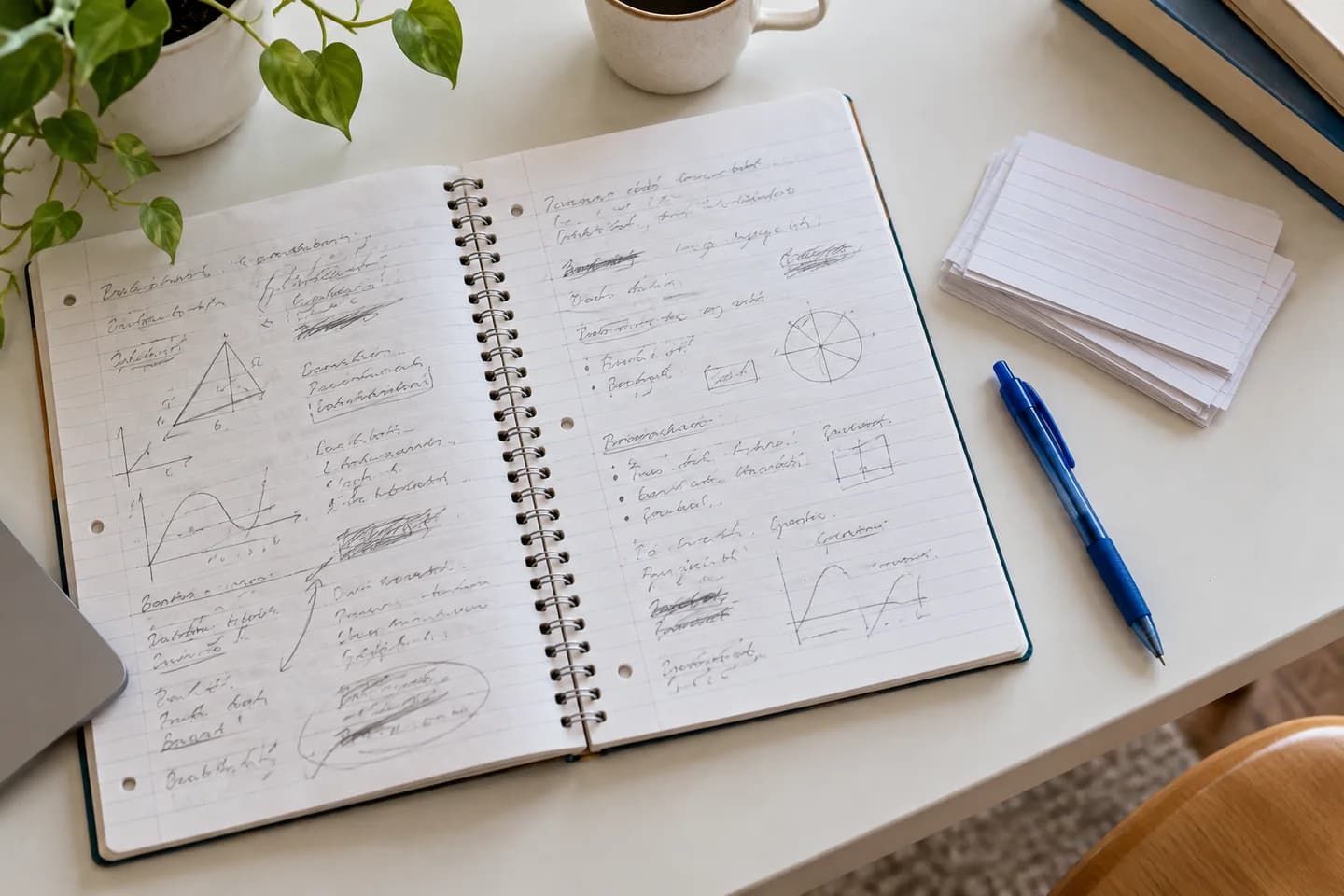
A sample week
On Monday, review a small set of misses and choose one skill. On Wednesday, learn that skill and try a few questions. On Saturday, complete a mixed set and compare your work with Monday’s notes. Move the days to fit your life.
Make room for review
Do not spend every minute answering new questions. Leave time to understand a mistake and try a similar question again. If a session runs short, write the next action down so you can pick up where you left off.
Adjust instead of starting over
At the end of the week, ask which sessions happened and which felt too long. Reduce the plan if it did not fit. Add time only when you know where it will come from and what you will use it for.

Plan your next week
Fill in the rows with your actual available time. The examples are suggestions, not required sessions.
| Day and time | One specific task | How I will check it |
|---|---|---|
| Monday, 20 minutes | Review three missed questions | Explain each correction aloud |
| ________________ | ________________ | ________________ |
| ________________ | ________________ | ________________ |
If you have only 15 minutes
Pick one missed question. Retry it, read the explanation if needed, and write one reminder for the next question. Stop there if the time is up. A small session still gives you information for the next one.
If you have an hour
Try a short mixed set, review the questions that gave you trouble, and use the remaining time for one focused skill. Keep a few minutes at the end to write down what to do next.